Source Quick Decontamination Carburetor Cleaner for Engines, Injectors, and Mechanical Parts
Find 30 listings for Quick Decontamination Carburetor Cleaner designed for engines, fuel injectors, and mechanical parts. Buyers can compare specifications, packaging options, and pricing from verified manufacturers in China.
Key considerations
Products List


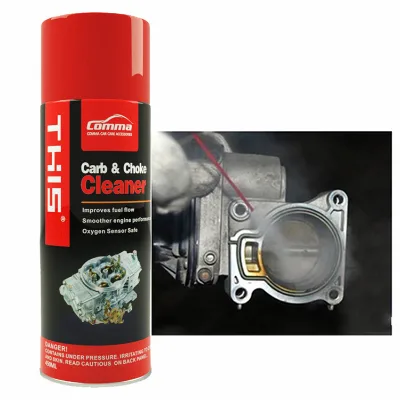
Choke and Carb Cleaner Carburetor Choke Cleaner Cleaning Carburetor Spray
$0.30 - $0.90
MOQ: 4500 Pieces


Factory Direct Sale High Quality Carb Cleaning Fluid Carburetor Cleaner
$0.42 - $0.62
MOQ: 1000 Pieces



Comprehensive Sourcing Guide
Strategic Sourcing Guide for Quick Decontamination Carburetor Cleaners
Procuring high-performance carburetor cleaners for industrial and automotive maintenance requires a rigorous approach to technical verification and supply chain stability. The market for quick decontamination agents is characterized by a wide variance in chemical formulations, packaging standards, and regulatory compliance levels. Buyers must navigate a landscape where product attributes such as flash points, volatility, and solubility directly impact safety protocols and application efficacy. This guide synthesizes available product data to establish a framework for evaluating suppliers, ensuring that the selected cleaning agents meet specific operational needs without compromising safety or regulatory adherence.
Technical Specifications and Chemical Properties
The efficacy of a carburetor cleaner is fundamentally determined by its chemical composition and physical state. In the context of industrial sourcing, the product is typically classified as an aerosol liquid, designed for rapid dissolution of carbon and oil pollution. A critical observation from current market listings indicates that these agents often possess a base pH, which is essential for breaking down the specific types of grime found in engine components. The physical state is consistently liquid, delivered via a pressurized canister, which facilitates immediate application and penetration into tight engine crevices.
Safety parameters are paramount when handling these chemicals. Data from available product profiles highlights a flash point of approximately 40°C and a boiling point range between 50°C and 120°C. These thermal properties dictate storage requirements and handling procedures during transport. A flash point of 40°C classifies the substance under Hazard Class 2.1, indicating flammability that requires strict adherence to safety regulations. Furthermore, the volatility of the product is a key performance indicator; observed data suggests a 100% volatile component, ensuring rapid evaporation after application, which prevents residue buildup. The density at 20°C is recorded at 0.78 g/cm³, a figure that influences the weight and shipping costs of the product.
The capacity of the containers varies significantly across different product lines. Listings show standard volumes ranging from 300ml to 1000ml, with specific models like the G1003 and G1001 offering 450ml configurations. Some packaging standards specify 450ml units packed in quantities of 12 or 24 pieces per carton. This variability requires buyers to align their inventory needs with the specific capacity requirements of their end-users or internal maintenance teams. The shape of the container is predominantly cylindrical, designed to fit standard spray nozzles and aerosol dispensing mechanisms.
Compliance, Certification, and Regulatory Standards
Navigating the regulatory landscape is a non-negotiable aspect of sourcing carburetor cleaners. The primary hazard classification observed is Class 2.1, which governs the transportation and storage of flammable gases and liquids. Buyers must verify that suppliers adhere to international standards for hazardous material handling. The HS Code 3402209000 is a critical identifier for these cleaning preparations, ensuring correct tariff classification and customs clearance procedures.
Certification status serves as a proxy for manufacturing quality and consistency. The ISO9001 certification is a standard benchmark observed in the supply chain, indicating that the manufacturer maintains a quality management system. While this certification is a strong indicator of process control, it does not guarantee the specific chemical purity of every batch. Buyers should request current certificates of analysis (CoA) to verify that the chemical composition matches the declared specifications, particularly regarding the base pH and volatile content.
The expiration date is another critical compliance factor. Products in this category typically have a shelf life of three years. This timeframe is influenced by the stability of the propellant and the active cleaning agents within the aerosol can. Exceeding this period may result in reduced pressure or chemical degradation, rendering the product ineffective. Additionally, the solubility profile is noted as negligible in certain contexts, which implies that the cleaner is designed to dissolve specific organic compounds without mixing with water or other solvents, necessitating proper disposal protocols.
Cost Drivers and Economic Factors
The pricing structure for carburetor cleaners is influenced by several variables, including raw material costs, packaging complexity, and order volume. The observed price range in the market spans from $0.30 to $1.08 USD per unit. This wide variance suggests that factors such as the specific chemical formulation, the quality of the aerosol can, and the inclusion of proprietary cleaning agents significantly impact the final cost.
Minimum Order Quantity (MOQ) is a primary driver of unit economics. Data indicates that MOQs can range from 600 pieces to as high as 12,000 pieces, with a specific observation of 7,500 pieces for certain models. Suppliers offering lower MOQs, such as 600 pieces, may charge a premium per unit due to the fixed costs of production setup and logistics. Conversely, larger orders often benefit from economies of scale, reducing the per-unit cost. Buyers must balance their inventory turnover rates with the financial constraints of high MOQs to optimize cash flow.
Packaging costs also play a significant role. The product is typically supplied in tin-plate cans or carton boxes, with specific configurations like 24 pieces per carton. The choice between tin-plate and other materials affects durability and shipping weight. Furthermore, the option for OEM customization, including design new packaging, adds a layer of cost that must be factored into the total procurement budget. The availability of free samples is a common practice, allowing buyers to test product quality before committing to large orders, though this does not offset the production costs of the bulk order.
Typical Applications and Performance Expectations
The primary application of these cleaners is the removal of carbon and oil pollution from mechanical components, specifically carburetors and fuel injectors. The product is marketed as a powerful cleaning agent capable of addressing enrichment issues and rosin buildup in engines. The designation "Without Dewaxing" suggests that the formulation is targeted at specific types of deposits, distinguishing it from general-purpose degreasers that may include wax-removing agents.
The cleaning mechanism relies on the high volatility and base pH of the solution. Upon application, the liquid rapidly evaporates, carrying away dissolved contaminants. This makes the product particularly suitable for automotive maintenance, where quick turnaround times are essential. The "Strong Abluent" classification indicates that the cleaner is effective against tough, adhered deposits that standard solvents might struggle to remove.
Applications extend beyond simple carburetor cleaning to include general engine care and the removal of dirt from mechanical parts. The versatility of the product is enhanced by its aerosol delivery system, which allows for precise application in hard-to-reach areas. However, the hazardous nature of the product requires that users employ appropriate personal protective equipment (PPE) and work in well-ventilated areas to mitigate the risks associated with flammability and inhalation of volatile fumes.
Supplier Evaluation and Sourcing Strategy
Evaluating suppliers requires a focus on their business type, origin, and operational capabilities. The majority of suppliers in this sector are manufacturers, located primarily in regions such as Guangdong, Guangzhou, and Shandong in China. This concentration of manufacturing hubs suggests a robust supply chain but also necessitates due diligence regarding the specific factory's capacity and quality control measures.
When assessing a supplier, buyers should verify their ability to handle OEM requests and their flexibility in packaging customization. The acceptance of OEM orders indicates a willingness to tailor products to specific brand requirements. Additionally, the delivery time is a critical factor, with observed lead times ranging from 20 to 25 days. Buyers must account for this lead time in their inventory planning to avoid stockouts.
The availability of free samples is a positive indicator of supplier confidence in their product quality. However, buyers should not rely solely on samples; they must also review the supplier's track record, certification validity, and ability to scale production. The capacity of the supplier to meet high MOQs without compromising quality is essential for long-term partnerships.
Quality Control and Long-Term Procurement Considerations
Maintaining consistent quality is vital for the reliability of carburetor cleaners. Buyers should implement a rigorous quality control process that includes verifying the physical state, volume, and chemical properties of each batch. The consistency of the flash point, boiling point, and density should be monitored to ensure that the product meets the specified safety and performance standards.
Long-term procurement considerations involve building a relationship with suppliers who can provide consistent quality and reliable delivery. The three-year expiration date of the product means that inventory management must be precise to prevent waste. Buyers should also consider the environmental impact of the product, particularly regarding the disposal of aerosol cans and the handling of hazardous waste.
The use of standardized packaging, such as the 450ml x 12 or 450ml x 24 configurations, simplifies logistics and storage. However, the option for custom packaging designs offers flexibility for branding but may introduce variability in supply chain efficiency. Buyers must weigh the benefits of customization against the potential for increased complexity and cost.
Comparative Analysis of Product Attributes
To facilitate decision-making, the following table summarizes key attributes observed in the market for carburetor cleaners. This comparison highlights the variations in specifications that buyers must consider when selecting a supplier.
| Attribute | Observed Range / Specific Value | Relevance to Procurement |
|---|---|---|
| Product Model | G1001, G1003, C1, YQ-C-0020 | Identifies specific formulation and capacity. |
| Volume | 300ml - 1000ml (Common: 450ml) | Determines shipping weight and usage rate. |
| Flash Point | 40°C | Critical for safety classification and storage. |
| Boiling Point | 50°C - 120°C | Indicates evaporation speed and heat resistance. |
| Hazard Class | 2.1 | Dictates transport regulations and handling protocols. |
| MOQ | 600 - 12,000 PCS | Influences unit cost and inventory commitment. |
| Lead Time | 20 - 25 Days | Affects supply chain planning and stock levels. |
| Certification | ISO9001 | Indicates quality management system adherence. |
| Origin | Guangdong, Guangzhou, Shandong, China | Impacts logistics costs and trade tariffs. |
| Packing | Tin-Plate Can, Carton Box (24/12 pcs) | Determines durability and storage efficiency. |
| Expiration | 3 Years | Guides inventory rotation and waste management. |
| Solubility | Negligible | Defines compatibility with other fluids and disposal. |
This comparative analysis underscores the importance of aligning product specifications with operational requirements. Buyers must carefully evaluate each attribute to ensure that the selected carburetor cleaner meets both performance expectations and regulatory standards. By adhering to these guidelines, procurement teams can secure a reliable supply of high-quality cleaning agents that support efficient engine maintenance and safety compliance.
FAQs
What is the flash point of Quick Decontamination Carburetor Cleaner?
The flash point is approximately 40°C, classifying it as Hazard Class 2.1. This thermal property dictates strict storage requirements and handling procedures during transport to ensure safety.
Which certification do manufacturers typically hold for this product?
Manufacturers typically hold ISO9001 certification, indicating adherence to quality management systems. Buyers should request current certificates of analysis to verify chemical composition matches declared specifications.
How long is the delivery time for these cleaning agents?
The standard delivery time ranges from 20 to 25 days. Buyers must account for this lead time in inventory planning to avoid stockouts during the procurement cycle.
Can buyers customize packaging for Quick Decontamination Carburetor Cleaner?
Yes, customization is available for packaging design. Suppliers may offer new packaging designs or accept client-provided designs, though this adds a layer of cost to the procurement budget.
What is the minimum order quantity for these cleaners?
Minimum order quantities range from 600 pieces to 12,000 pieces depending on the model. Lower MOQs may carry a premium per unit due to fixed production and logistics costs.
Which capacity options are available for the aerosol cans?
Available capacities range from 300ml to 1000ml, with 450ml being a common standard. Specific models like G1003 offer 450ml configurations packed in cartons of 12 or 24 pieces.